What is Java? Java for School Students.

Sep 16, 2025
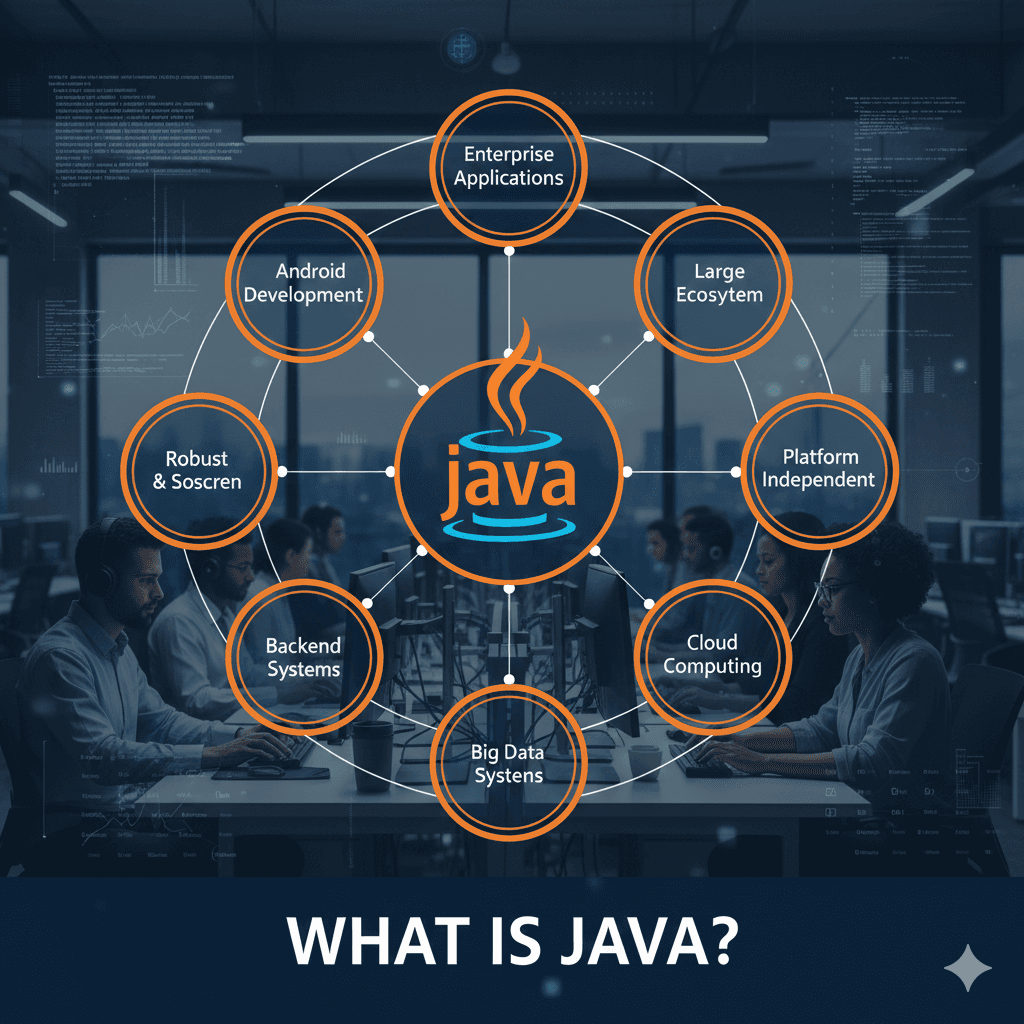
“Write once, run anywhere” - slogan created by Sun Microsystems to show cross-platform benefits of Java.
Java is a popular programming language used in app development, desktop computing, and gaming. It was created by James Gosling, Mike Sheridan, and Patrick Naughton of Sun Microsystems, later acquired by Oracle. When Java was introduced in 1995, it was marketed for smart TVs; ironically, the technology was too advanced for cable TV at the time. Java soon became an industry standard for internet programming due to its ability to run on any platform.
According to the TIOBE programming language popularity index, Java has consistently ranked as a top 10 programming language from mid-2015 to 2021. In fact, as of September 2021, Java is the #1 most popular programming language. This could be why Java remains the primary language used on the AP Computer Science exam.
Knowledge of Java and its applications will undoubtedly help students in their computer science education. Let’s dive deeper into the characteristics and syntax of Java, then explore professional opportunities available to Java developers.
Characteristics of Java
Java is the foundation for many products you use every day, including Spotify, Twitter, and CashApp. Java is so widely used because it’s a universal, multi-purpose language. If you’re introducing Java for beginners, it’s important to understand the characteristics of the language. Java is:
Object-oriented: Java is organized around data (or “objects”) rather than functions.
Run on any operating system: Whether you are using Apple’s macOS, Microsoft Windows, or another operating system, Java code can run on every single one.
Multi-threaded: Allows multiple parts of a program to run at the same time, getting tasks done more quickly.
Because Java is an object oriented programming language, it has the following features:
Abstraction: The technique of hiding underlying details and showing only relevant information to the user
Encapsulation: The process of protecting data in a class and creating rules for when the program can access it to increase the security of data.
Inheritance: When new classes are created, they can acquire attributes and methods from existing classes.
Polymorphism: The ability of objects or methods to take many forms in different contexts.
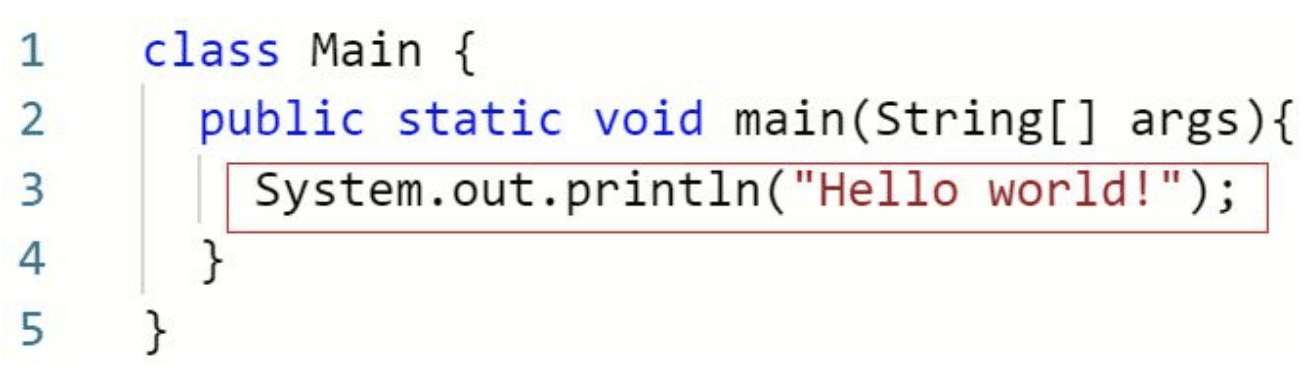
Java Data Types
In Java, variables act as containers which store data. To create (or declare) a variable, you need to define its type AND the data it will store. Below are the different data types available in Java.
Byte: stores numbers from -128 to 127
Short: stores numbers from -32,768 to 32,767
Int: stores integers from -2,147,483,648 to 2,147,483,647
Long: stores integers from -9,223,372,036,854,775,808 to 9,223,372,036,854,775,807
Float: stores fractional numbers with 6-7 digits after the decimal point
Double: stores fractional numbers with 15 digits after the decimal point
Boolean: stores true and false values
Char: stores a single character or letter
Java for Kids
With so many coding languages out there, how do we know which ones offer the appropriate level of challenge for our students? Let’s walk through a suggested coding language progression for students that includes Java.
In elementary school, students typically begin their programming journeys with block coding for kids. For example, Scratch and Blockly include drag-and-drop interfaces that offer a great introduction to foundational computer science concepts. In middle school, many students graduate to line coding languages. Line coding involves writing “sentences” of code, much like one would write a paper. We suggest students start with a line coding language with visual output, like JavaScript. That way, students can easily see the cause and effect of their code.
Then, in middle school, students might tackle Python, an ideal language for the intermediate coder. Python courses prepare students for more challenging programming languages, like Java. In Codelicious Computer Science Curriculum, students are introduced to Java in 8th grade. This course, called Computer Science Applications Java, explores loops, objects, methods, and classes to build applications like a fitness tracker. As a result, learners have been introduced to Java concepts prior to taking coding classes for high school students.
Introducing students to Java in middle school is particularly beneficial because Java is the basis for AP Computer Science. According to the College Board website, high school Java curriculum covers programming concepts as well as ability to read and write code. Giving students the necessary foundations in computer science starting in elementary and middle school helps them prepare for success on the AP exam.
Technologies that Use Java
You likely interact with devices that use Java all the time, especially those included with the IoT or Internet of Things. IoT devices are everyday devices that have the ability to connect to a network, communicate, and transmit data via the Internet. This is all about extending connectivity beyond standard devices (laptops, PCs, smartphones, and tablets) to non-internet-enabled physical devices. Some of these devices are smart TVs, smart appliances, wearable technology, toys, and smart speakers. It also might be a sensor in a conference room that facilitates the creation of new meetings based on room size, type, and features available. Then, when the meeting starts, the lights could dim, temperature could adjust, and the appropriate slideshow loads on a screen.
Java is also used in everyday applications and tools, especially if you are an Android user. Netflix, Uber, Amazon, and Wikipedia search were all built on or are now running on Java. Since Java is so versatile and universal, apps are able to run on any number of devices, regardless of type.
STEM Careers that Use Java
Systems Engineers and System Architects
System Engineers (sometimes called System Architects) are hired for their expertise around IT (information technology) solutions. They propose and maintain combinations of hardware, software, tools, and frameworks that help the business in its day-to-day operations. Knowledge of Java is crucial because the language’s universal nature helps all of these programs communicate with one another. Systems Engineers also must be great team players; they often work with the end users of their solutions to receive feedback and improve processes.
Backend Developer
Backend Developers create and maintain the parts of a website or app that a user never sees. This generally includes three components: a server, an application, and a database. Backend Developers use Java to build the parts of the program and make sure all these components can communicate with each other. Furthermore, they make sure that actions, like adding an item to a cart or filling out a form, execute quickly and correctly. Backend Developers must be creative and inquisitive because they frequently work with development teams to problem solve and debug their code.
Game Developer
Video Game Developers take a concept or design and turn it into a playable game. They use multiple programming languages, like Java, C, and C++, to create movements, program non-playable characters (NPCs), and construct terrain. Since games release on different platforms and consoles, Game Developers make sure that the game works correctly regardless of the platform. Video Game Developers must have critical thinking skills to turn a concept to reality and strong communication skills to convey their ideas to others.
Android Developer
Android Developers create apps for the Android Marketplace, which is a direct competitor to the Apple App store. Smartphones like the Google Pixel and Samsung Galaxy require the Android versions of apps we use everyday, like social media apps and music streaming apps. The Android Marketplace has its own set of requirements; Android Developers use their knowledge of said requirements and programming languages (like Java) to design, build, and debug various app features. Android Developers must have strong creative and collaborative skills to work with teams and bring these apps to life.